Sicilian Cassata Cake
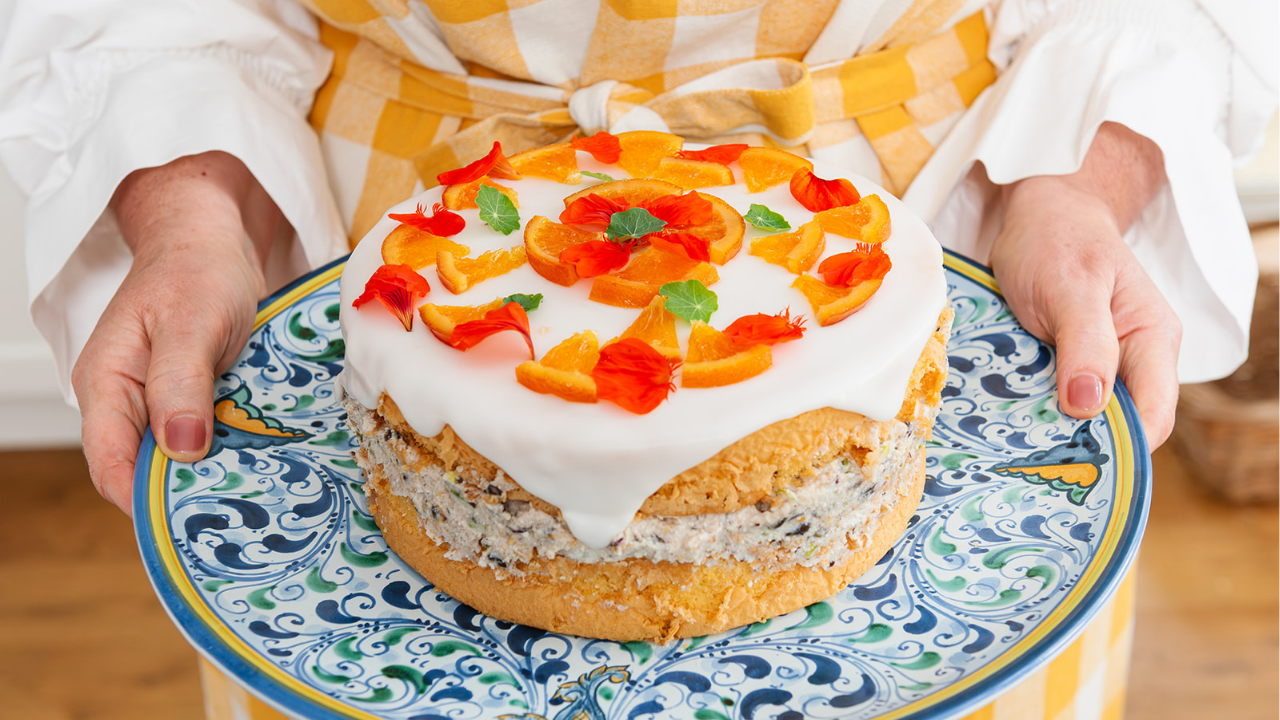
Sicilian Cassata is a rich, layered cake originating in 10th-century Palermo during Arab rule. It represents a blend of cultures through its ancient Greek influence with the sheep’s ricotta and Arabic influence with the sugar, citrus, spices and marzipan. This Cassata has evolved from a simple baked item into a lavish Easter dessert, perfected by convent nuns and later featuring Spanish sponge and French icing.
My recipe is a friendlier version, so you can easily make it at home for Easter or any special occasion. It is best made the day before you intend to serve it, and you can store leftovers in an airtight container in the refrigerator for up to 3 days.
Makes: 23cm Cake and serves approximately 15 people
Preparation: 1.5 Hours
INGREDIENTS
For the sponge
4 (80g) eggs, at room temperature
¾ cup caster sugar
⅔ cup plain flour
⅓ cup corn flour
1 tsp baking powder
For the filling
½ cup Cinzano Bianco Vermouth
750g fresh ricotta, drained
120g caster sugar
1 tsp vanilla extract
1 tsp ground cinnamon
Rind of one orange
130g candied orange peel, chopped finely (We love Singing Magpie Produce)
100g good-quality dark chocolate, finely chopped
50g unsalted pistachios, chopped finely
Decorating the Cassata
300g pure icing sugar
2 ½ tbsp water
Sliced candied fruit/flowers, for decorating
METHOD
First, you must prepare the sponge
Preheat the oven to 160°C (fan-forced).
Lightly grease 1 x 23cm round cake tin with butter and line the base with a round of baking paper; then grease this with butter as well. Sprinkle a little plain flour into the tin to coat the base and the sides, tapping out any excess.
Sift flour, corn flour, and baking powder into a bowl and set aside.
In the bowl of a stand mixer, whisk the eggs and sugar until they are thick and pale in colour.
Sift the flour mixture over the top of the eggs and sugar, and gently fold through until just combined.
Pour the mixture into the tin and give three little taps on the bench top to settle the mixture.
Bake for 35 minutes, or until pale golden in colour. The sides will begin to pull away slightly from the edge of the tin.
Remove immediately and run a small butter knife around the edge of the sponge. Turn out onto a wire rack, lined with a tea towel. Remove the baking paper from the base, and quickly invert the sponge right way up. Using the tea towel here will make this easier.
Allow to cool completely.
For the filling
Beat the ricotta and sugar in the bowl of a stand mixer, fitted with the paddle attachment, until smooth. Alternatively, hand-held beaters can be used instead.
Stir through vanilla, cinnamon, orange rind, candied citrus, chocolate, and pistachios until well combined.
Get your sponge cake and slice the cake in half gently (a large serrated bread knife works well here). Then, using a pastry brush, brush the vermouth over the inside of each piece of sponge cake.
Place one piece of the sponge onto a large cake plate, then spoon on the ricotta filling and spread it out evenly over the base. Place the second piece of sponge on top.
An offset spatula will come in handy here to smooth out the outer edges of the cake so it all looks neat and uniform.
Allow the cake to rest in the fridge overnight, or at the very least, for 4 hours to allow the flavours to combine.
For the decoration
Combine the sifted icing sugar with the water until smooth and glossy; it should be a thicker consistency, rather than too runny.
Pour the icing over the top of the cold cake, allowing it to fall down the sides.
Place the extra candied fruits and flowers (if using) on top in a decorative pattern.
Keep in the fridge until ready to serve. Store leftovers in an airtight container in the refrigerator for up to 3 days.